WARRUMBUNGLE, KAPUTAR AND TOWARRI TARTANS
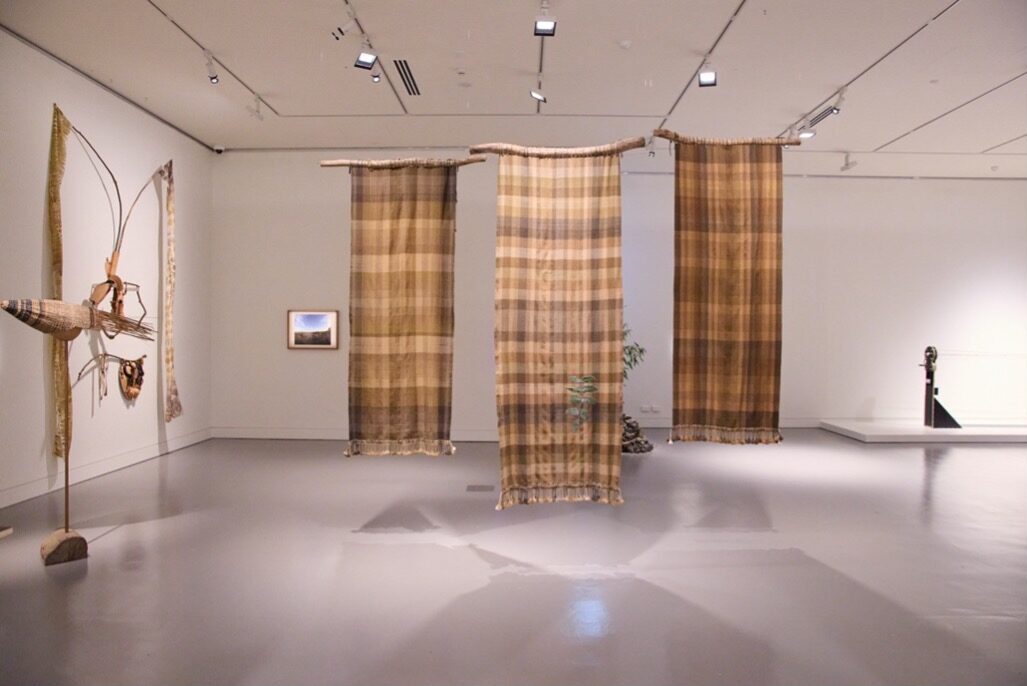
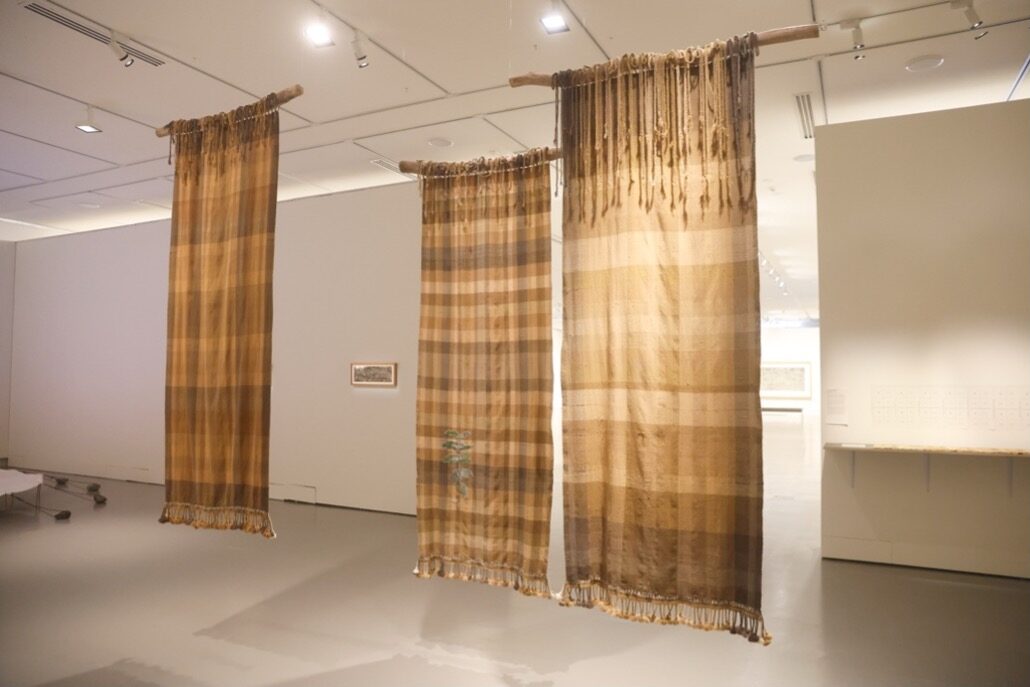
Materials:
Possum fibre, silk, superfine merino wool, natural plant dyes
Concept:
Original tartan patterns were often made from dyes of local plants available in specific regions where they were created. This creates truly unique colour palettes and connects the fabric to the land from which it originated. This connection to place through natural dyes is a form of expressing identity.
These blankets are created using a double weave technique enabling a meter wide blanket to be woven on a fifty-centimetre loom. The text woven into the edge band is created on an Inkle loom, this produces a warp faced fabric. The dye materials were gathered, processed, and wools were usually dyed on location in the Brigalow Belt Bioregion South.
Flanagan is an Australian with Celtic heritage. These blankets are woven from possum, silk and merino wool, dyed with the bark and leaves of local trees.
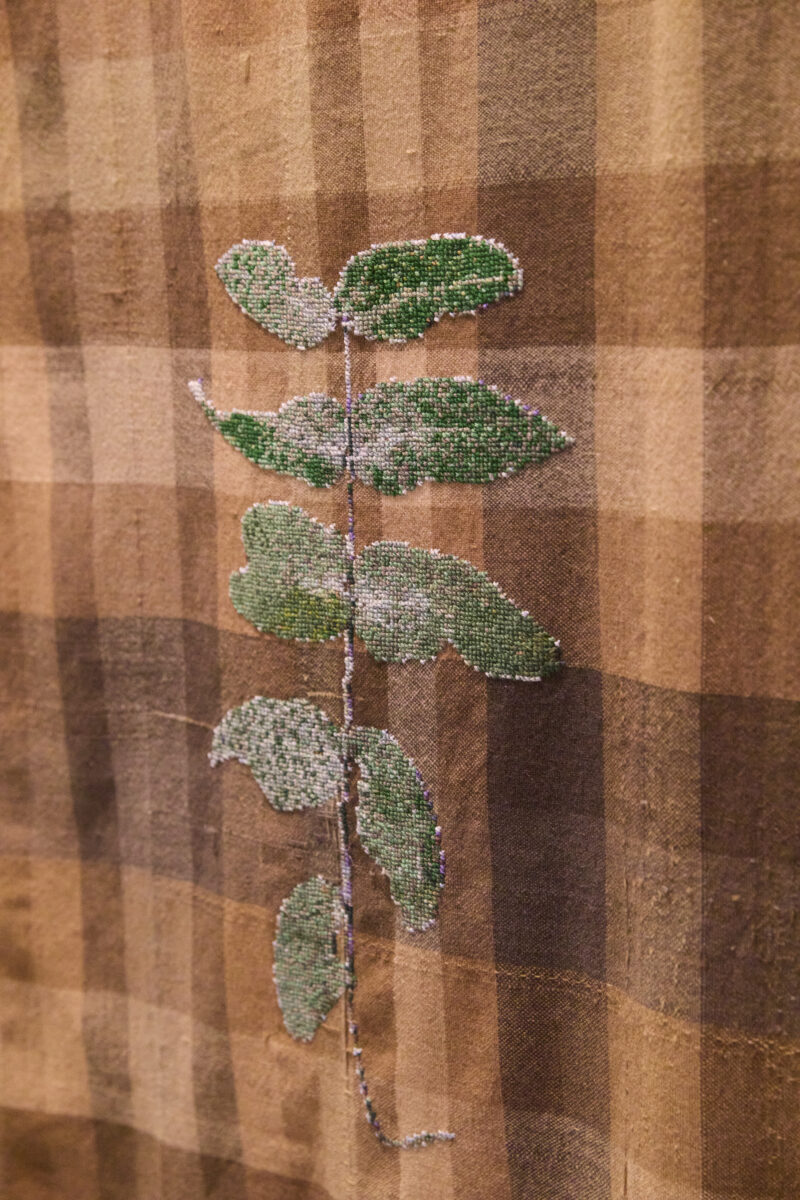
Warrumbungle is a Gamilaraay word that means crooked peak. The Warrumbungle Tartan is dyed from the leaves and bark of the Eucalyptus Rossi, commonly known as the Inland Scribbly Gum. Eucalyptus Rossi is a common tree in the Warrumbungle Ranges.
Towarri Tartan is dyed with the bark and leaves of Angophora Floribunda, commonly known as Rough Barked Apple. This tree was located downstream from the Washpool waterhole on the banks of Middle Brook. Towarri means ‘warrior’ in the Wonnarua language.
Kaputar Tartan is dyed with the bark and leaves of the Eucalyptus Melanophiloia, commonly known as Silver Leaved Ironbark. This ironbark grows on Gomeroi country.
Exhibitions:
• Landrelations, Museum of Art and Culture Lake Macquarie, Booragul NSW Australia 1 Aug – 30 Oct 2025
Thanks:
This project has been assisted by the Australian Government through Creative Council, its arts funding and advisory body.